
Travel needs can vary widely depending on the destination, journey length and personal packing habits. A short work trip may require only a compact suitcase, while a family holiday or extended journey may call for more storage capacity.
Choosing the right luggage helps keep belongings organised and makes moving between transport hubs and accommodation easier. A thoughtful comparison of size, construction and practical features can make the buying process more straightforward.
Consider the Type of Journey
Start by identifying the kinds of trips the suitcase will be used for. Frequent business travellers may prioritise compact dimensions and organised compartments, while holidaymakers may need additional capacity.
Different travel environments can also influence the choice. A suitcase used mainly in airports may have different requirements from one regularly transported through streets, public transport and uneven surfaces.
Think about the following:
- How long are typical journeys?
- Will the suitcase be carried onboard or checked in?
- How much clothing and equipment is usually packed?
- Will the luggage be shared with another traveller?
- How often will it be used?
These questions provide a practical starting point.
Selecting an Appropriate Size
Luggage capacity should reflect the amount of belongings carried rather than simply choosing the largest available case.
Oversized luggage can become difficult to manoeuvre and may exceed airline weight limits. Smaller luggage can encourage more efficient packing but may not provide enough space for longer trips.
Check both internal capacity and external dimensions. Airline rules may include the wheels and handles when measuring luggage, so the complete size matters.
Evaluating Construction Quality
The exterior material, frame, zippers and handles contribute to a suitcase’s durability.
Hard-shell cases offer a structured exterior, while soft-sided luggage may provide additional flexibility in some designs. Neither option is automatically best for every traveller.
Pay attention to the quality of the moving parts. Wheels, telescopic handles and zippers experience repeated use, so their construction should be considered carefully.
A suitcase should also be easy to lift into storage areas and transport between locations.
Organising Belongings Efficiently
Interior organisation can make a major difference to the packing experience. Compartments, straps and pockets help separate clothing, footwear and smaller items.
Packing cubes can provide additional organisation, particularly when travelling for several days. They may also make it easier to locate specific belongings without unpacking the entire case.
Liquids, electronics and important documents should be packed according to relevant travel and security requirements. Items that need quick access should be kept in suitable compartments.
Mobility and Handling
A suitcase should move comfortably in the environments where it will be used.
Check wheel movement, handle extension and overall balance. A case that is easy to move when empty may feel different when fully packed.
If possible, test the handle and wheels before purchasing. Consider how easily the luggage can be lifted, turned and stored.
Weight is also important. A heavy empty suitcase leaves less room for belongings under airline weight restrictions.
Comparing Brands and Product Features
Brand reputation can help buyers identify established luggage ranges, but the specifications of the individual model remain important.
Compare materials, dimensions, wheel systems, security features, interior layout and warranty coverage. Also review whether repair services or replacement components are available.
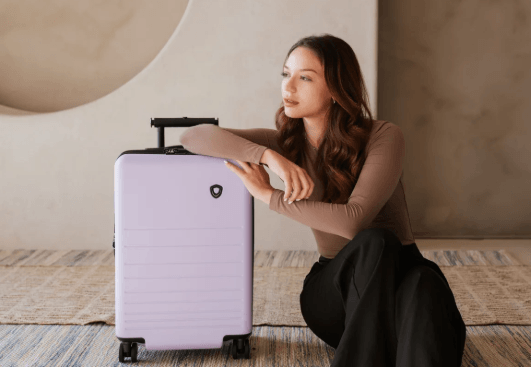
Travellers researching lojel luggage can review the product information and compare its features with their intended use.
Before making a purchase, confirm the exact model, size and included features. If a suitcase is being purchased online, review delivery arrangements and return conditions as well.
Budget and Long-Term Value
A luggage purchase should balance affordability with expected use. Someone who travels frequently may benefit from investing in stronger construction and reliable components.
Occasional travellers may find that a simpler design meets their requirements. In either case, compare the full product specification rather than assuming a higher price guarantees suitability.
Warranty terms and repair options can also influence long-term value. A suitcase that can be maintained or repaired may remain useful for longer.
Caring for Luggage
After each journey, empty the suitcase and check for dirt, moisture or damage. Clean the exterior according to the manufacturer’s instructions and allow the interior to dry before storage.
Inspect wheels and handles periodically. Remove debris that may affect movement and avoid forcing damaged zippers.
Store luggage in a dry location where it will not be exposed to unnecessary pressure or moisture.
FAQs
1. What is the most important feature when choosing luggage?
There is no single feature that suits everyone. Size, weight, construction, wheel quality and interior organisation should be evaluated according to travel habits.
2. Should I buy luggage based on airline cabin dimensions?
If you intend to use it as carry-on luggage, check the current size and weight restrictions of the airlines you commonly use. Requirements can differ between carriers.
3. How can I make a suitcase last longer?
Avoid overpacking, clean it after trips, store it properly and inspect wheels, handles and zippers regularly. Follow the manufacturer’s care instructions.
Conclusion
Selecting suitable luggage involves understanding the journey, choosing an appropriate size and evaluating construction, mobility and organisation. By comparing practical features and considering long-term maintenance, travellers can choose a suitcase that supports their travel habits. The right luggage should make packing and moving between destinations easier and more manageable.