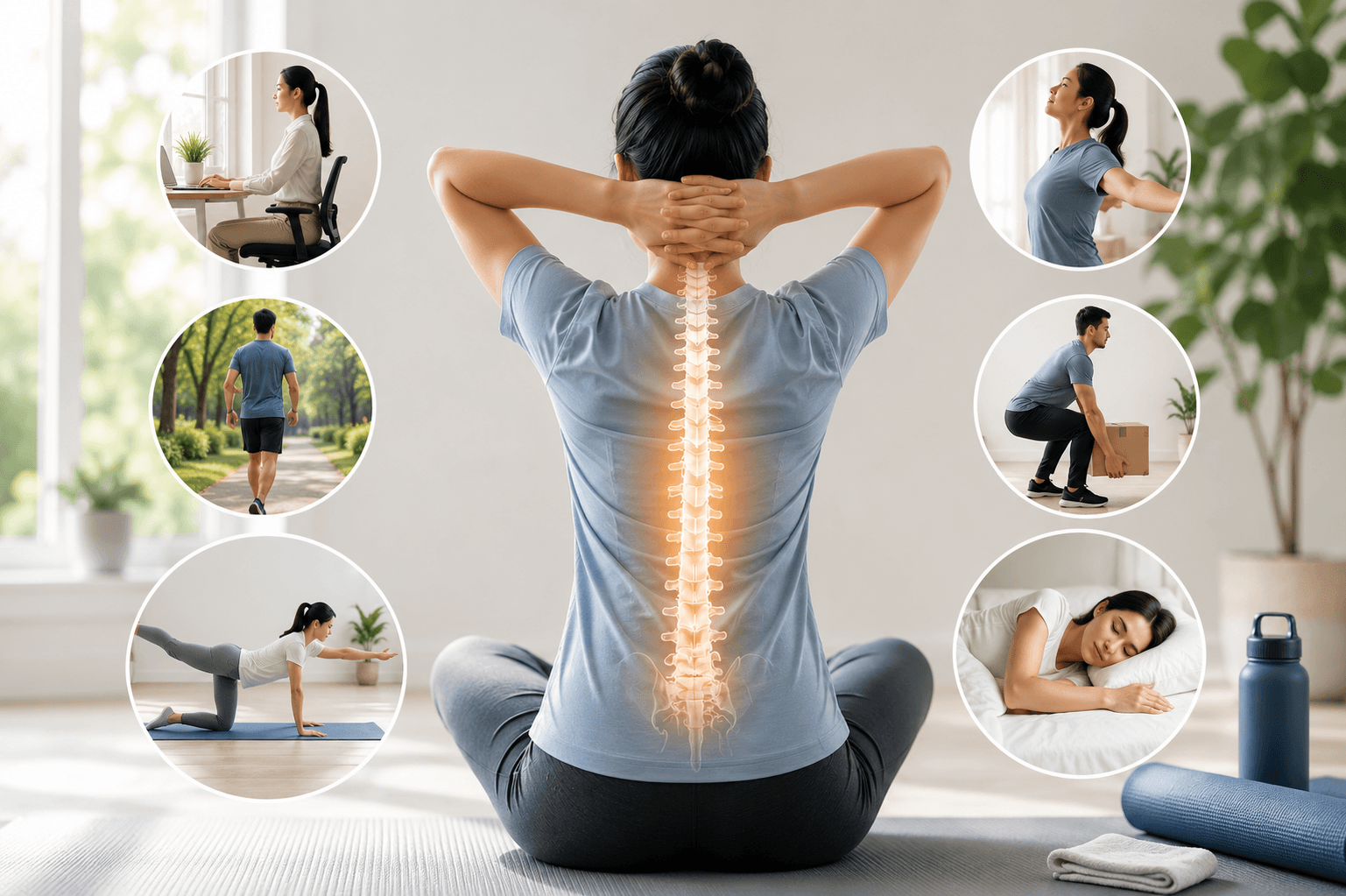

The spine plays an essential role in supporting the body, maintaining posture and allowing movement. From sitting at a desk to walking, lifting objects and exercising, almost every daily activity involves the muscles and structures surrounding the spine. When discomfort develops, it can affect concentration, mobility, sleep and general quality of life.
Understanding spinal health is therefore useful for people of different ages and activity levels. Good habits, appropriate physical activity and professional guidance when needed can all contribute to better movement and comfort.
The Role of the Spine in Daily Life
The spine provides structural support and protects the spinal cord. It is made up of vertebrae, discs, joints, ligaments and surrounding muscles that work together to support movement.
Its natural curves help distribute forces through the body. These structures allow people to bend, turn, stand and walk while maintaining balance. Because the spine is involved in so many activities, prolonged strain or poor movement habits may contribute to discomfort.
Back and neck symptoms can have different causes. Muscle tension, injuries, disc-related conditions and other medical issues may produce similar symptoms. It is important not to assume that all pain has the same explanation.
How Everyday Habits Affect Posture
Daily routines can influence how the back and neck feel. Sitting for long periods, working with a screen positioned poorly or repeatedly looking down at a phone may place additional demands on the neck and upper back.
A few practical adjustments can make a difference:
- Position screens at a comfortable viewing height.
- Keep both feet supported while sitting.
- Avoid remaining in one position for extended periods.
- Take short movement breaks during desk work.
- Adjust chairs and work surfaces to suit your body.
There is no single perfect posture that everyone must maintain throughout the day. Regularly changing position and moving comfortably are often more practical than trying to hold one rigid position.
The Importance of Movement and Exercise
Appropriate physical activity supports general health and helps maintain strength, flexibility and coordination. Walking, swimming and other low-impact activities may suit people who are gradually returning to movement.
Strengthening the muscles around the trunk and hips can also support everyday activities. However, exercises should match a person’s current ability and health circumstances. If a movement increases pain significantly, it may need to be modified or stopped until professional advice is obtained.
People with persistent or recurring symptoms should seek an appropriate assessment before beginning a demanding exercise programme.
When Professional Guidance May Help
Back and neck discomfort can sometimes improve with changes in activity and routine. However, persistent symptoms, repeated episodes or pain that interferes with daily activities may require professional assessment.
A qualified healthcare professional can review symptoms, medical history and movement patterns. They may recommend further investigation, physical rehabilitation or other appropriate care depending on the findings.
People searching for a chiropractor hong kong should consider professional qualifications, clinical experience, communication and whether the practitioner explains treatment options clearly. It is important to understand the proposed approach, expected benefits, possible risks and alternatives before agreeing to treatment.
Chiropractic care is not suitable for every condition, and treatment should never replace urgent medical assessment when warning signs are present.
Recognising Symptoms That Need Urgent Attention
Certain symptoms require prompt medical evaluation. These include new or worsening weakness in the limbs, loss of bladder or bowel control, numbness around the groin or saddle area, or severe pain following a significant accident.
Fever, unexplained weight loss, a history of cancer or other concerning medical factors may also change how back pain should be assessed. A healthcare professional can determine whether urgent investigation is necessary.
Building Sustainable Spinal Health Habits
Long-term spinal health is supported by consistent habits rather than one isolated intervention. Maintaining regular activity, managing work ergonomics, getting sufficient rest and avoiding sudden increases in physical workload can all be helpful.
It is also useful to pay attention to how the body responds to different activities. Gradually increasing exercise intensity and allowing recovery time may reduce unnecessary strain.
Frequently Asked Questions
1. What are common causes of back discomfort?
Possible causes include muscle strain, prolonged static positions, injuries, joint problems and disc-related conditions. An assessment is needed to identify the likely cause in an individual case.
2. Can posture alone cause back pain?
Posture may influence discomfort, particularly when someone remains in one position for a long time. However, back pain usually has multiple possible contributing factors, so posture should not be treated as the only explanation.
3. When should I seek professional help for spinal discomfort?
Consider an assessment if symptoms persist, repeatedly return or interfere with daily activities. Seek urgent medical attention for serious warning signs such as new limb weakness or loss of bladder or bowel control.
Conclusion
Spinal health is closely connected to everyday movement, work habits and general physical wellbeing. Understanding the role of the spine, staying active and recognising when professional guidance is appropriate can help people make informed decisions about their health. A balanced approach focuses on individual needs, safe movement and timely assessment rather than relying on a single solution.