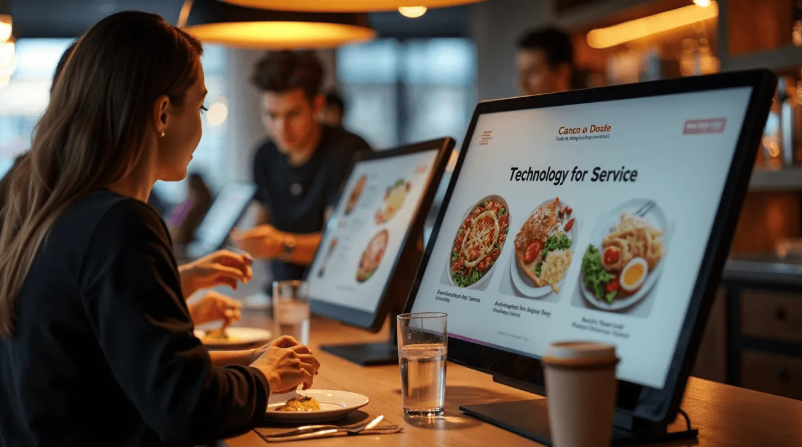

Restaurant teams balance customer service, food preparation, payments, stock management, and staff coordination throughout the day. During peak periods, even small delays can affect the entire operation. Digital tools can help organise these tasks, but their effectiveness depends on how they connect with the restaurant’s existing workflow.
The most useful technology is not always the most complicated. A system should solve a clearly identified problem, be easy for employees to learn, and provide reliable information to the people who need it. Restaurant operators should therefore evaluate the whole process rather than focusing on a single screen or feature.
Identify the Main Operational Bottleneck
Before choosing software, managers should determine where time and resources are being lost. Common issues include long queues, repeated order entry, unclear kitchen tickets, inconsistent menu updates, and slow end-of-day reporting.
Staff observations can reveal problems that are difficult to see in summary reports. For example, the ordering process may appear fast, while the kitchen spends considerable time clarifying customisation requests. Another restaurant may have an efficient kitchen but struggle to handle payment during busy periods.
Mapping the customer journey and employee workflow provides a clearer starting point than purchasing technology based on general promises of efficiency.
Simplify Ordering and Menu Management
Create a structured digital menu
A digital menu should be easy to browse, with clear categories, readable text, accurate prices, and useful descriptions. Customers should understand what is included in each item and how to choose available variations.
If a restaurant frequently changes its menu, centralised updates can reduce manual work. Managers should establish a process for approving price changes, marking items unavailable, and checking that all relevant ordering channels display the latest information.
Make customisation manageable
Customisation should be presented in a consistent format. Required choices, optional extras, and additional charges need to be clear. The system should prevent incomplete orders where certain selections are essential, while avoiding unnecessary steps for simple items.
The kitchen must receive the same information that the customer selected. A well-designed interface is of limited value if modifiers disappear during transmission or appear in a format employees cannot understand.
Connect the Front of House and Kitchen
Restaurant operations involve multiple teams working under time pressure. If order information is passed through disconnected tools, staff may spend time repeating details or tracking missing tickets.
A connected workflow can send order information to the relevant preparation area and provide a clear record of the order’s status. It may also help staff identify which orders are waiting, being prepared, or ready for collection.
However, technology should reflect the physical layout and menu. A restaurant with several preparation stations needs sensible routing rules, while a smaller venue may need only a straightforward display. The system should match operational complexity rather than introduce more steps than it removes.
Select Features Based on Business Needs
When evaluating restaurant kiosk software operators should consider whether it supports the required ordering flow, integrates with existing point-of-sale processes, and provides clear information for kitchen staff and managers.
Important questions include:
- Can customers customise orders without confusion?
- Are menu prices and availability easy to maintain?
- Does the system send orders to the correct preparation area?
- Can staff manage cancellations, refunds, and corrections?
- Are sales reports useful for everyday decisions?
- What happens when connectivity or hardware fails?
- Is technical support available when the restaurant needs it?
These questions help distinguish essential capabilities from features that may look attractive but provide little practical benefit.
Consider Total Cost and Reliability
The purchase price is only one part of the investment. Operators should also account for recurring fees, devices, installation, maintenance, payment processing, training, and possible integration costs.
Reliability deserves equal attention. A system that works well during a quiet demonstration may behave differently during a busy service. Before launch, test realistic workloads and common exception cases, including multiple orders arriving together, unavailable items, payment interruptions, and order modifications.
Restaurants should also understand how data is backed up and exported. This matters if the business changes providers, adds locations, or needs to review historical transactions.
Design for Customers With Different Needs
Digital ordering should remain straightforward for people with different levels of technical confidence. Large, readable text, logical navigation, clear instructions, and accessible placement can improve usability.
Staff assistance should remain available, especially for customers who have questions about ingredients, dietary needs, or special requests. The goal is to offer convenient choices rather than make technology a barrier to service.
Menu content must be accurate. If the restaurant provides allergen or dietary information, that information should be reviewed and maintained through an established process. A digital interface cannot compensate for incorrect kitchen records or inadequate food-handling procedures.
Train Employees Before Expanding Use
Employees should understand both normal operation and exception handling. Training should include placing and modifying orders, resolving payment problems, handling sold-out items, and escalating technical issues.
A pilot rollout can be useful. Start with one service area or a limited number of devices, observe how staff and customers respond, and refine the workflow before expanding. Managers should document common questions and provide short reference instructions for recurring tasks.
Employee involvement is valuable because the people using the system daily can identify confusing features and unnecessary steps. Their feedback should be reviewed alongside customer feedback and operational data.
Measure the Impact Objectively
Establish baseline measures before launch. Depending on the restaurant, useful indicators may include order accuracy, average time to place an order, queue length, kitchen preparation time, customer complaints, and staff workload.
Review these measures across different shifts and days. An improvement during quiet periods may not translate into better peak-hour performance. Managers should also look for unintended effects, such as congestion around pickup areas or more incomplete orders.
The purpose of measurement is to improve the process, not simply to demonstrate that the new technology is being used.
Frequently Asked Questions
1. Is specialised restaurant software necessary for a small business?
Not always. A small restaurant should choose a solution that matches its order volume and operational needs. A simpler system may be more appropriate than a complex platform with features the team will not use.
2. What is the biggest risk when introducing new technology?
One common risk is implementing a system without redesigning the workflow or training staff. Technology can reproduce existing problems if the underlying process remains unclear.
3. How long should a restaurant test a new solution?
The testing period should cover normal and busy service periods, menu changes, refunds, connectivity issues, and other realistic scenarios. The goal is to understand whether the solution performs reliably under actual operating conditions.
See also: Personal Branding for Business Owners: A 2026 Guide
Conclusion
Restaurant technology is most effective when it addresses a specific operational need and connects smoothly with the people and processes around it. Clear menus, accurate order routing, reliable hardware, employee training, and meaningful performance measures all contribute to successful implementation. By testing carefully and making decisions based on evidence, restaurant operators can improve efficiency without losing sight of the customer experience.