ByJohn A
Smart Pianos and Light-Up Keyboards: A Beginner’s Guide to Home Music Learning
Learning to play the piano used to be a commitment wrapped in steep tradition: months of tedious scale drills, expensive private tutors, and a massive, heavy instrument taking up half the living room. For generations, thousands of eager beginners quit within their first few weeks simply because the gap between starting out and playing an actual song felt impossibly wide.
Today, technology has completely rewritten that narrative. The rise of interactive musical instruments is turning what used to be a frustrating chore into an engaging, gamified experience. At the center of this revolution are smart instruments and light-up key beds, which bridge the gap between structured education and instant playing gratification. Whether you are an adult fulfilling a lifelong dream or a parent looking for a fun way to introduce your kids to music, modern digital keys offer a faster, more intuitive path to playing.
What Makes a Piano “Smart”?
At first glance, an interactive keyboard might look like a standard digital piano, but the magic lies beneath the hood—and in its connectivity. Unlike traditional instruments, intelligent keyboards integrate hardware with software, linking seamlessly to tablets, smartphones, or computers via Bluetooth or USB.
Instead of staring at a static piece of sheet music and trying to decode treble and bass clefs on day one, learners get real-time feedback. Embedded sensors track which keys you hit, how hard you press them, and whether your timing is on point. The accompanying apps transform learning into an interactive process: song notes light up as you play, background tracks adapt to your speed, and built-in algorithms spot your mistakes instantly so you do not build bad habits.
For beginners, this immediate connection between visual cues and physical keys removes the initial barrier to entry. You do not need years of music theory just to play a recognizable melody.
The Magic of Light-Up Keyboards
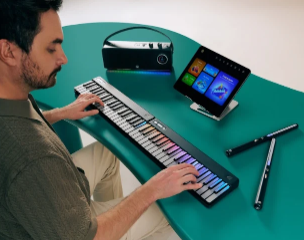
The most visually distinct feature of modern beginner instruments is illuminated keys. Using LED lights embedded directly above or inside each key, these instruments act as a direct visual guide, showing you exactly where to place your fingers.
Light-up key guidance works on a fundamental human principle: visual cues accelerate muscle memory. When learning a new song, the lights prompt you in real time. As a note approaches in the app’s interface, the corresponding key illuminates.
This guided approach offers several key advantages for beginners:
- Instant Gratification: You can play a complete, recognizable song within your very first session, boosting confidence and motivation.
- Streamlined Hand Positioning: Seeing the lit-up path helps train your hands to navigate the keyboard naturally without constantly second-guessing finger placement.
- Custom Pace Control: Most companion apps allow you to slow down the tempo or set the software to “wait mode,” where the song only progresses when you hit the correct lit key.
While traditionalists once worried that light-up guides might become a crutch, modern learning software uses them strategically as training wheels. As your confidence grows, the lights can be dimmed or turned off entirely, leaving you with genuine playing ability and strong muscle memory.
Gamification and the Modern Learning Experience
The biggest enemy of learning any new skill is boredom. Traditional practice routines often feel repetitive, but modern music learning apps take cues from popular video games to keep players hooked.
Through scrolling waterfall displays—similar to popular rhythm games—learning a song feels less like studying and more like playing. High scores, streak counters, and leveled progression turn daily practice into something you look forward to rather than a chore.
Beyond game mechanics, digital platforms offer vast digital sheet music libraries spanning every genre imaginable. Instead of being stuck playing nursery rhymes or centuries-old classical pieces, beginners can learn current pop hits, movie soundtracks, jazz standards, or video game themes right from the start. When you are learning music you actually love, practicing stops feeling like work.
Choosing the Right Instrument for Your Journey
When shopping for an interactive instrument, it helps to know what level of features fits your living space, budget, and long-term goals. Beginners generally choose between portable light-up keyboards and full-sized, furniture-style digital uprights.
If space or mobility is your main priority, a lightweight 61-key or 88-key portable model is ideal. These can sit on a desk, store easily in a closet, and travel anywhere. On the other hand, if you want an instrument that serves as a permanent, elegant fixture in your home while delivering the authentic feel of a traditional acoustic instrument, an upright digital model is the way to go.
When exploring modern smart pianos, look for features like weighted or semi-weighted keys, which mimic the resistance of real hammer actions. This helps build proper hand strength and technique from day one. High-quality sound engines, headphone jacks for silent late-night practice, and reliable wireless connectivity are also essential features that ensure your instrument grows with you over time.
For those ready to explore their options, browsing a dedicated smart piano collection can help you compare different form factors, key actions, and digital features to find the perfect fit for your home.
Tips for Getting the Most Out of Your Smart Piano
Having high-tech gear is a fantastic starting point, but building lasting musical skills still requires a smart approach. Here is how to maximize your learning experience:
- Keep Sessions Short and Consistent: Practicing for 15 to 20 minutes every day yields far better results than a single two-hour marathon session on the weekend. Short, regular exposure reinforces muscle memory much faster.
- Balance Light Guidance with Ear Training: Use the illuminated key guides to learn the mechanics of a song, but periodically close your eyes or turn off the lights to test your memory and train your ears.
- Utilize the Built-In Metronome: Rhythm is just as important as playing the right notes. Use your app’s built-in timing tools to build a steady internal clock early on.
- Use Headphones for Uninhibited Practice: One of the best perks of digital instruments is privacy. Plug in a pair of headphones so you can practice freely without feeling self-conscious about making mistakes.
Final Thoughts
Technology has demystified music education, making the piano accessible to anyone with the desire to learn. By pairing intuitive visual light guides with interactive software and gamified lessons, light-up instruments remove the intimidation factor that kept so many people from making music in the past. They offer a welcoming, flexible, and deeply rewarding way to bring the joy of music straight into your living room. Whether you want to play casually after work or lay a strong foundation for serious study, there has never been a better time to sit down at the keys.